
Francine’s Intimacy and Unresolved Future
Butcher's CrossingThis thread traces Francine’s brief connection with Andrews, her clear-eyed understanding of his inexperience, and her continued life in Butcher’s Crossing after he returns changed.
increasing Bearing strength in each event
 decreasing
Bearing strength in each eventdecreasingA Life Built in the Village
A Life Built in the Village
Choosing a smaller place
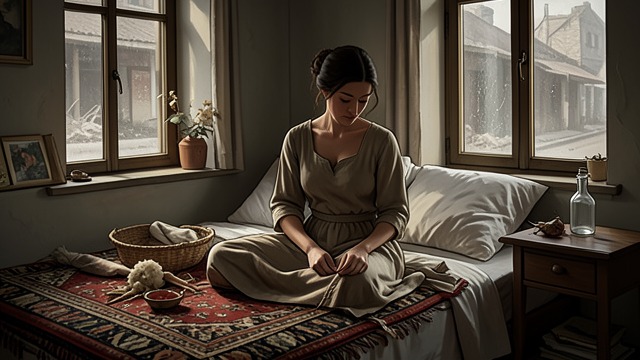
Francine tells Andrews that she left Saint Louis because there were too many women competing for work. She prefers Butcher’s Crossing, where summers are quieter and she can sometimes walk alone before the hunters return.
Making a room of her own
Her room contains a rug sent from Saint Louis and decorations she has arranged with care. She hopes to install a glass window to keep out the dust, an ordinary domestic ambition that contrasts with the roughness and transience of the settlement.
Francine’s life is not simply the victim’s story Andrews first imagines. She describes her own preferences and judgments, even though her work and limited surroundings shape the choices available to her.
Recognizing Andrews’s Youth
Recognizing Andrews’s Youth
An invitation without pressure
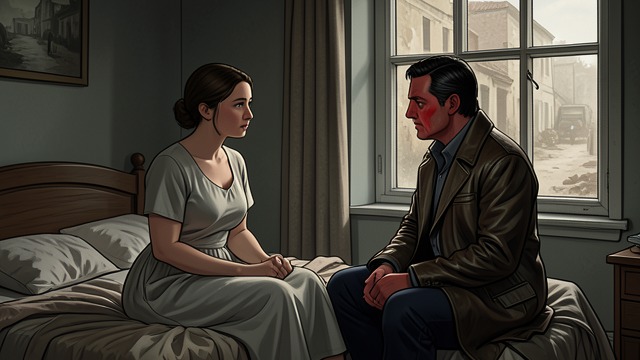
Francine invites Andrews to her room after he leaves the saloon, and he responds with visible uncertainty. She notices his softness and inexperience, calls him young, and offers intimacy as something she wants rather than as paid work.
A connection he cannot yet sustain
Andrews initially approaches her through pity, imagining her as a helpless victim. Francine’s matter-of-fact response to her life unsettles that assumption, but when he sees her naked he becomes overwhelmed by the thought of the many men who have known her and abruptly flees.
She reads his withdrawal without turning it into a permanent accusation. Her attention reveals a capacity to distinguish his confusion from a judgment of her, while the encounter exposes how far Andrews remains from understanding either desire or another person.
Waiting Through the Winter
Waiting Through the Winter
Absence without certainty
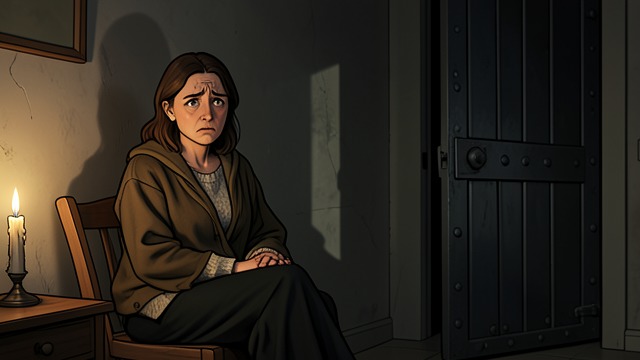
Francine remains in Butcher’s Crossing while Andrews and the others disappear into the mountains. When he returns, she tells him that she thought he was dead, a belief shared by people in the settlement.
A memory held open
Her recollection of their first meeting has not erased the hurt or confusion of his departure. She remembers that he was young, and she believes that if he had returned then, the difficulty could have passed.
The months of waiting make the reunion emotionally unequal: Andrews brings an ordeal he can narrate, while Francine has lived with an absence whose outcome she could not know. Her response gives his return a human consequence beyond the fate of the hides.
Welcoming a Changed Man
Welcoming a Changed Man
Recognition through touch
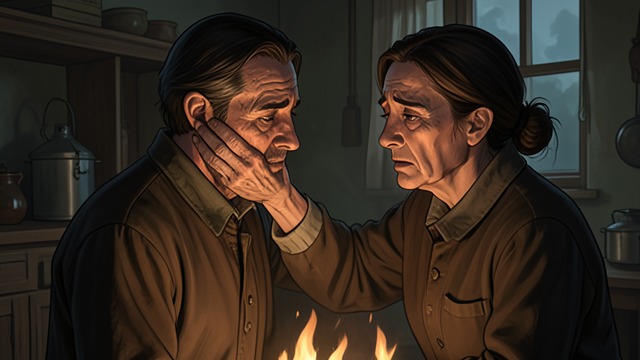
Francine recognizes Andrews and examines the darker face and hardened hands produced by the months outdoors. She recalls having predicted that the wind and sun would change him, and he admits that he has changed enough to return to her.
An apology accepted
Andrews explains that his earlier flight was his own failure, not something Francine caused. She accepts this account without demanding that he make the past more meaningful than it was, and she invites him to remain rather than leave again.
Their reunion is not a restoration of their earlier innocence. Francine sees the difference in him and acknowledges that something between them has changed, but she is glad he is alive and present now.
Left Behind at Dawn
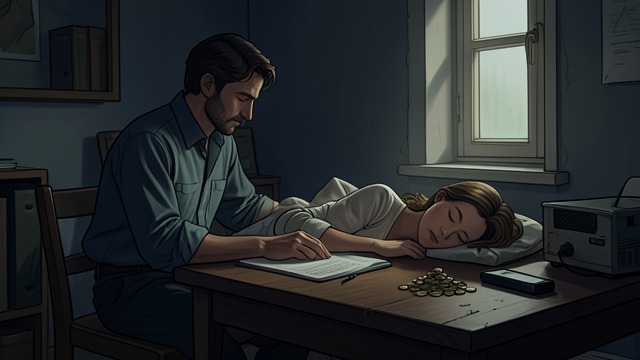
Left Behind at Dawn
Temporary refuge
Andrews spends five days and nights with Francine, withdrawing from the public world into the dimness of her room. Their intimacy gives him warmth and shelter, but he increasingly understands it as a refuge rather than a shared future he can promise.
Care without possession
Before leaving, he places money on her table for her needs and for small improvements to the room. He watches her sleeping and feels tenderness for her, while recognizing that he cannot claim to know her fully or dictate what their connection means to her.
Andrews departs at dawn without waking her. Francine remains in Butcher’s Crossing, while his decision leaves their bond unresolved: his concern is real, but it cannot protect her from his departure or turn affection into a settled life together.
Before Andrews arrives, during Francine’s years at Butcher’s Crossing
Early in the story, during Francine’s first private meeting with Andrews
During the winter that Andrews and the hunting party spend trapped in the valley
Near the ending, on the evening Andrews returns to Butcher’s Crossing
At the final dawn, after Andrews spends several days with Francine
